What are the most common digital authentication methods?
In order to build and maintain a comprehensive access management program, enterprise leaders must get to know the various forms of digital authentication at their disposal.
Digital authentication is the process of verifying that users or devices are who or what they claim to be in order to enable access to sensitive applications, data and services. There are multiple ways to verify electronic authenticity. Here's an outline of the most popular digital authentication methods in the enterprise today.
Unique passwords. When most of us think of authentication, using a unique username and password combination likely comes to mind. In the enterprise, passwords remain the most common digital authentication method. User or devices typically have their own username that is not secret. This username is combined with a unique and secret password known only by the users or devices to access company data, applications and services. While the unique password authentication method works, it can become burdensome to end users due to the sheer number of passwords they must manage. This is one reason why technologies such as single sign-on (SSO) have become so popular. With SSO, users must only remember a single secret password that will authenticate them and allow access to multiple corporate services.
Preshared key (PSK). A PSK is a password that is only shared among users or devices that are authorized to access the same resources. The most common example of PSK use within the enterprise is during Wi-Fi authentication. A PSK is often used to allow employees to gain access to the corporate network. However, because the password is shared, it is considered less secure than individual password alternatives.
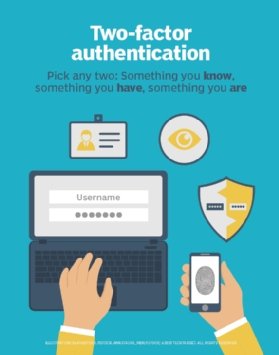
Beef up security by incorporating two-factor authentication into access management programs.
Biometric authentication. The use of biometrics to verify users is growing in popularity. Fingerprints and facial recognition are two popular methods used today. Other methods include hand geometry, retina and iris scans, voice recognition and signature-based analysis. It has become common for devices such as smartphones, tablets and PCs to incorporate biometric technologies into their hardware for digital authentication purposes.
Two-factor authentication (2FA). 2FA takes the process of a standard username and unique secret password and applies a second layer of verification. This second layer in 2FA may include a text message sent to a specific mobile phone number when access is granted, the use of hardware and software tokens, biometric authentication or push notifications to the user.
While the unique password authentication method works, it can become burdensome to end users due to the sheer number of passwords they must manage.
Behavioral authentication. Behavioral biometric authentication is a more complex method for verifying users. This authentication method is commonly implemented in highly sensitive businesses deals. Behavioral biometric verification can involve analyzing keystroke dynamics or mouse-use characteristics. To verify a user or machine, AI analyzes user data or a device's typical computing behavior. If that behavior veers outside of predefined baselines, it triggers a lockdown of what that user or device is authorized to access.
Device recognition. Endpoint security management platforms can be implemented that recognize authorized hardware and immediately allow them access to certain network resources. This type of authentication is most used in companies with BYOD policies. It is an added precaution to ensure that only devices that are deemed appropriate can connect to the network.
Next Steps
Learn why security experts are calling behavioral biometrics the "smart" authentication method that could pave the way to a password-free future in this e-handbook
While network security focuses on solely protecting networks, cloud security provides protection for networks, servers, containers, apps and more.
Continue Reading
The quick answer is yes -- IT administrators can monitor employees' messages in Microsoft Teams. But organizations need the proper license plans and ...
Continue Reading
When it comes to the SOAR vs. SIEM debate, it's important to understand their fundamental differences to get the most benefit from your security data.
Continue Reading