Home > Security Tips > Threat Monitor > Skype: Its dangers and how to protect against them
Security Tips:
EMAIL THIS
 TIPS & NEWSLETTERS TOPICS 

THREAT MONITOR

Skype: Its dangers and how to protect against them


Mike Chapple
05.17.2006
Rating: -3.78- (out of 5)


Threat Monitor
Digg This!    StumbleUpon Toolbar StumbleUpon    Bookmark with Delicious Del.icio.us    Add to Google


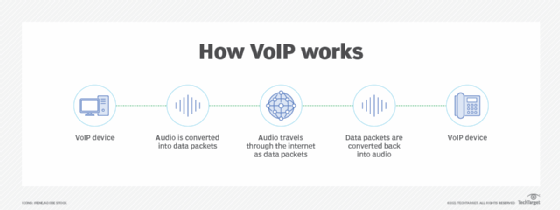
Unless you've been hiding under a technology rock for the past two years, you've undoubtedly heard about Skype – the free voice over IP (VoIP) telephony solution that's spreading around the Internet like wildfire. With the promise of free calling, Skype's gathered an international following of over 100 million users.

However, while Skype might be a fun toy for home use, it may represent a definite threat to your enterprise security. Users attempting to make personal calls on company time or save a few bucks on their personal telephone bill might unwittingly jeopardize your data. Let's take a look at a few of the more alarming features of Skype:

  • Skype is a closed-source VoIP solution. Skype does not disclose the cryptographic protocols used by its software. This could lead to "security through obscurity" concerns. Indeed, a white paper by Simson Garfinkel pointed this out in March 2005. Skype reacted quickly by commissioning Anagram Laboratories to conduct an evaluation of the VoIP system. The evaluation, published a month later, granted Skype a clean bill of health. That said, I'd be much happier if Skype either opened to public scrutiny the source code for their security features or relied upon an accepted cryptographic package.

  • Some Skype traffic may take place in the clear. Garfinkel's analysis identified unencrypted communications related to call setup that may make it possible for an eavesdropper to perform traffic analysis (i.e. determine who calls whom and for how long). Anagram's evaluation doesn't refute this finding.

  • Skype traffic bypasses audit controls. By their nature, VoIP calls placed on the Skype network evade local call auditing systems. If you operate in a regulated environment, this may pose an unacceptable risk or require the use of specialized controls designed specifically to audit Skype traffic.

  • Skype's EULA grants Skype the use of the system on which it is installed. Article 4 of the Skype end user license agreement states, "You hereby acknowledge that the Skype Software may utilize the processor and bandwidth of the computer (or other applicable device) You are utilizing, for the limited purpose of facilitating the communication between Skype Software users." Enough said.

...


Blocking Skype

If you decide that Skype poses a threat to your organization, you may choose to block it entirely. However, that's not an easy task with modern security technology. You're probably thinking that you can just block the Skype destination port or, if that fails, simply block all access to the Skype server IP addresses. Unfortunately, these techniques are completely ineffective. Skype is capable of tunneling over a standard HTTPS connection, preventing port filters from distinguishing it from other port 443 traffic. Additionally, Skype servers (a.k.a. supernodes) are moving targets – there simply isn't a master list that you can block outright.

There are solutions for those willing to invest a little time and money. First, some firewall manufacturers now include explicit code that's able to detect and filter Skype communications. For example, SonicWall security appliances introduced Skype detection/filtering capabilities with version 3.1.0.5 of SonicOS. In addition, Packeteer's Packet Shaping appliances are able to detect and either throttle or completely block Skype communications.

If these solutions don't fit your budget, you'll need to get more creative. For example, you can implement strict egress filtering on your network to block all unspecified outbound traffic, but that's likely to be an extremely awkward solution on all but the most well-defined networks. Another possibility is using your existing intrusion prevention system (IPS) to block Skype traffic. Skype activity signatures are floating around the Internet for a variety of IDS/IPSes.

Perhaps the easiest way to control Skype usage is to strictly manage desktops in your enterprise through the use of Windows Group Policy or similar controls. If users are unable to install the Skype client, you won't need to spend as much time worrying about how to block Skype traffic on your network.

About the author
Mike Chapple, CISSP is an IT Security Professional with the University of Notre Dame. He previously served as an information security researcher with the National Security Agency and the U.S. Air Force. Mike is a frequent contributor to SearchSecurity, a technical editor for Information Security magazine and the author of several information security titles including the CISSP Prep Guide and Information Security Illuminated.


Rate this Tip
To rate tips, you must be a member of SearchSecurity.com.
Register now to start rating these tips. Log in if you are already a member.


BROWSE BY TAG
Threat Monitor,   Network Protocols and Security,   Enterprise Network Security,   VIEW ALL TAGS

Digg This!    StumbleUpon Toolbar StumbleUpon    Bookmark with Delicious Del.icio.us    Add to Google


RELATED CONTENT
Threat Monitor
How to prevent phishing attacks with social engineering tests
An enterprise strategy for Web application security threats
How SSL-encrypted Web connections are intercepted
How a corporate Twitter policy can combat social network threats
Cyberwarfare and the enterprise: Is the threat real?
Software security threats and employee awareness training
Newest malware threats
How to defend against rogue DHCP server malware
When BIOS updates become malware attacks
Mac OS memory flaws pose challenges for enterprise endpoint protection

Network Protocols and Security
How to prevent phishing attacks with social engineering tests
How SSL-encrypted Web connections are intercepted
DNSSEC deployment challenges can be overcome
Microsoft issues SMB vulnerability advisory, patch pending
Microsoft repairs Windows media, TCP/IP vulnerabilities
How to test IPv6 infrastructures
DNSSEC deployments gain momentum since Kaminsky DNS bug
Kaminsky interview: DNSSEC addresses cross-organizational trust and security
How to create secure Windows FTP automation
PCI compliance requirement 4: Encrypt transmissions

RELATED GLOSSARY TERMS
Terms from Whatis.com − the technology online dictionary
5 terms you need to know before you employ VoIP  (SearchSecurity.com)
digest authentication  (SearchSecurity.com)
IGP  (SearchSecurity.com)
IP spoofing  (SearchSecurity.com)
Secure Sockets Layer  (SearchSecurity.com)
smurfing  (SearchSecurity.com)
Transport Layer Security  (SearchSecurity.com)

RELATED RESOURCES
2020software.com, trial software downloads for accounting software, ERP software, CRM software and business software systems
Search Bitpipe.com for the latest white papers and business webcasts
Whatis.com, the online computer dictionary

DISCLAIMER: Our Tips Exchange is a forum for you to share technical advice and expertise with your peers and to learn from other enterprise IT professionals. TechTarget provides the infrastructure to facilitate this sharing of information. However, we cannot guarantee the accuracy or validity of the material submitted. You agree that your use of the Ask The Expert services and your reliance on any questions, answers, information or other materials received through this Web site is at your own risk.


Research Solutions for Network Security, Access Control and Security Threats
TechTarget Security Media
Information Security View this month\\'s issue and subscribe today.
Information Security Decisions Apply online for free conference admission.
SearchSecurity.com
HomeNewsMagazineMultimediaWhite PapersLearningAdviceTopicsEventsAbout Us

About Us  |  Contact Us  |  For Advertisers  |  For Business Partners  |  Site Index  |  RSS
TechTarget provides technology professionals with the information they need to perform their jobs - from developing strategy, to making cost-effective purchase decisions and managing their organizations' technology projects - with its network of technology-specific websites, events and online magazines.

TechTarget Corporate Web Site  |  Media Kits  |  Site Map


All Rights Reserved, Copyright 2003 - 2009, TechTarget | Read our Privacy Policy
  TechTarget - The IT Media ROI Experts